The Situation
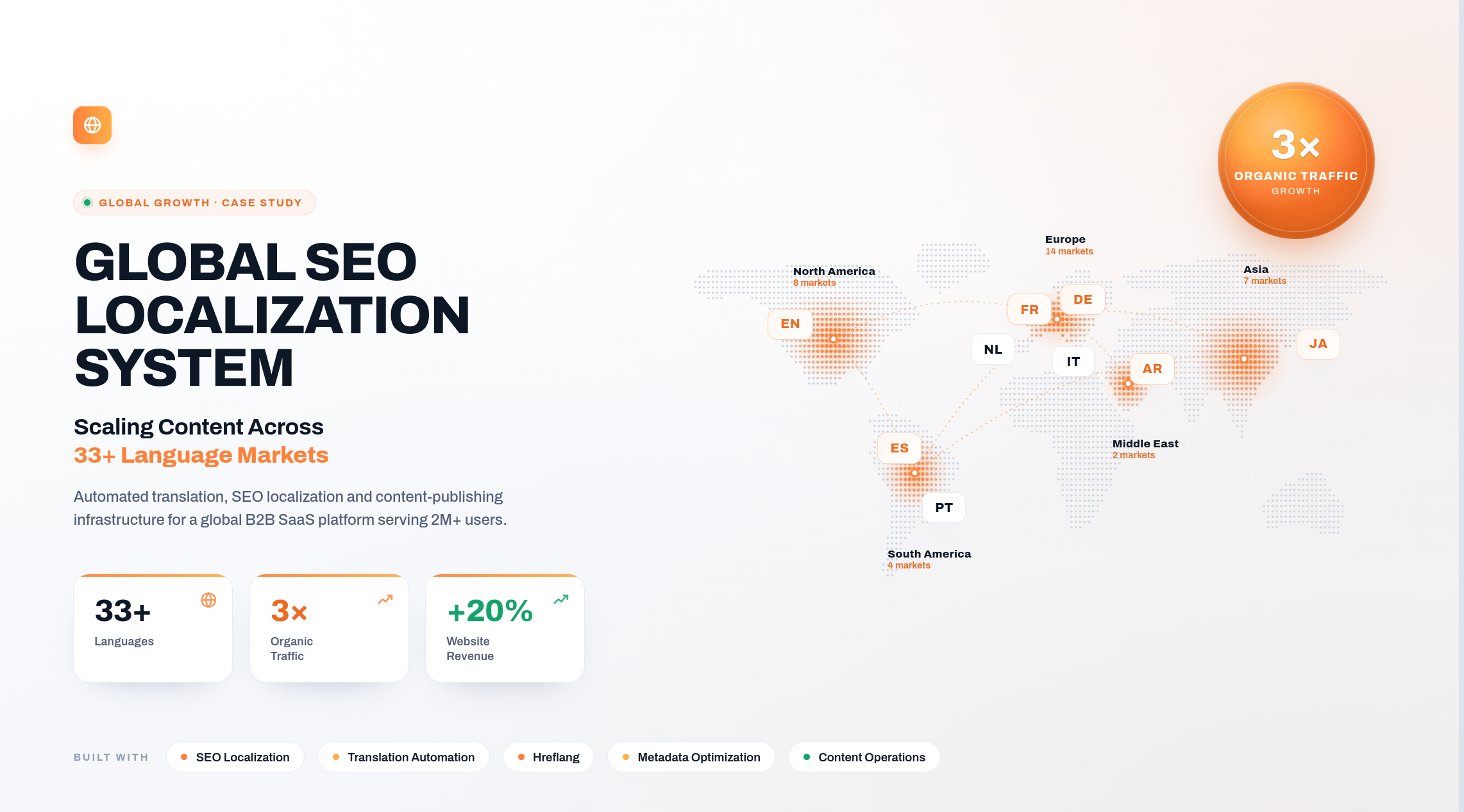
A B2B SaaS company with 2 million+ users had a global product — but a fragmented localization setup. Translations were inconsistent across markets, SEO metadata was missing or wrong, hreflang signals were broken, and brand voice varied widely depending on who had handled a given market.
The result: the company was leaving significant organic traffic on the table across 33+ language markets.
What We Built
An end-to-end automated translation pipeline designed to fix all of it at scale.
SEO Infrastructure
Audited and rebuilt the SEO metadata layer across all locale variants. Every page now has correctly structured title tags, meta descriptions, canonical tags, and hreflang attributes for all active language markets. Search engines can correctly index and serve the right locale to the right audience.
Translation Pipeline
Built an automated pipeline that handles content at scale:
- Source content in primary language flows through a structured translation layer
- Output is validated against SEO requirements before publishing
- Hreflang relationships are generated automatically from the content graph
- Brand voice guidelines were encoded into the process to ensure consistency across all 33+ markets
Quality and Consistency
Created a brand voice reference system used across all translation outputs — so copy in Portuguese reads like the same company as copy in Japanese, not like a different product.
The Results
- Organic traffic: +3x year-over-year
- Website revenue: +20% annually
- Markets covered: 33+ language markets with consistent SEO infrastructure
- Zero manual coordination required to publish new locale content
The localization operation went from a fragmented, manual process to a systematic pipeline that scales with the product.
Want your international pages to actually rank? Book a free audit.